

The rhythmic thud-thud-thud of a traditional mechanical press is a sound etched into industrial history. For decades, it signaled production, progress, and power. But walk onto the floor of a cutting-edge factory today, and you might hear… something different. Or perhaps, remarkably, less. What’s replacing that iconic heartbeat of manufacturing? The quiet hum and astonishing versatility of the modern Servo Press System. This isn't just an upgrade; it's a fundamental reimagining of how we shape metal, assemble components, and build the future.
Think about the limitations of yesterday's presses. Rigid strokes. Fixed speeds. Crude tonnage control. Like trying to paint a masterpiece with only a roller. Every changeover meant downtime, adjustments were approximations, and complex parts often demanded multiple machines or frustrating compromises. Scrap piles grew, energy bills soared, and the quest for perfect precision felt like chasing a mirage.
Enter the Servo Press: Where Software Meets Steel 🤖🔧
At its core, a servo press replaces the inflexible mechanical drive (flywheels, clutches, complex gearings) with a sophisticated electric servo motor directly driving the ram. Think of it like swapping a manual transmission for a finely tuned, computer-controlled electric powertrain in a high-performance car. This single shift unlocks an unprecedented level of programmable control over every single aspect of the press stroke:
* **Ram Motion:** Dictate *exactly* how the ram moves. Need a slow, controlled approach to precisely position delicate material? Done. Require blinding speed through the non-forming part of the stroke to maximize output? Program it. Want a deliberate pause at the bottom of the stroke for perfect forming or coining? Easy. Dwell times? Infinitely adjustable. This is Motion Sculpting™.
* **Speed Control:** Adjust speed independently for different segments of the stroke. Slow down for forming accuracy, accelerate for efficiency. Optimize for each specific material and part geometry, not the other way around.
* **Tonnage \u0026 Force Profiling:** Apply precisely the right amount of force, exactly where and when it's needed. No more over-pressing delicate flanges or under-pressing critical features. Monitor force in real-time for 100% quality assurance.
* **Position Accuracy:** Achieve micron-level repeatability in ram position. Critical for intricate progressive dies, precision stamping, and assembly operations demanding perfect alignment.
This isn't just flexibility; it's **manufacturing artistry made programmable**. It transforms the press from a blunt instrument into an intelligent, adaptable tool.
Beyond Flexibility: The Tangible Triumphs of Servo Power ✨💰
The programmable nature translates directly into hard, measurable benefits that resonate from the shop floor to the CFO's office:
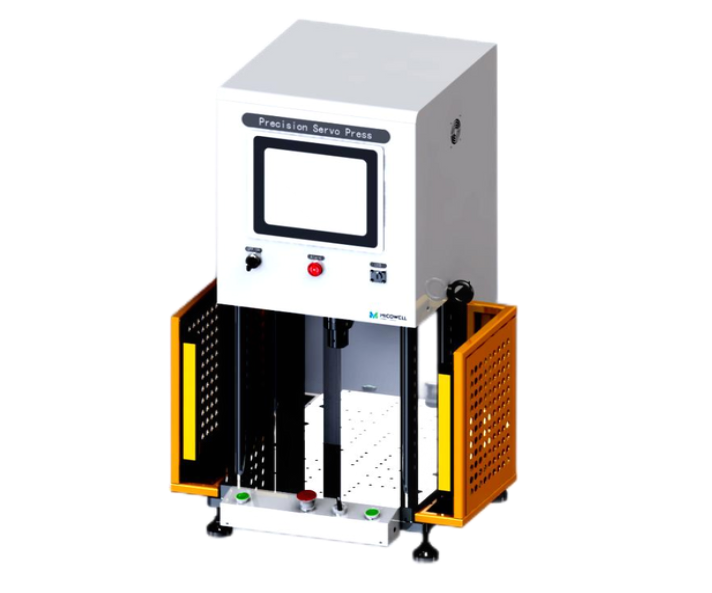
1. **Radical Reductions in Scrap \u0026 Rework:** Imagine forming complex aluminum components without tearing or wrinkling. Picture deep draws on stainless steel without cracking. Servo motion control allows for optimal material flow, minimizing stress concentrations and defects. Real-time tonnage monitoring acts as an instant quality gate, rejecting out-of-spec parts *before* they enter inventory. Scrap rates often plummet by 30-70%.
2. **Unlocking Impossible Geometries:** Traditional presses struggle or fail with parts requiring multiple hits, intricate bends, or combinations of forming and cutting in a single stroke. Servo presses excel here. The ability to control speed, dwell, and force profiles precisely makes the \"impossible\" part suddenly manufacturable in a single hit. This slashes secondary operations, handling, and associated costs.
3. **Die Longevity Revolution:** The enemy of expensive tooling is shock loading and excessive stress. Servo presses eliminate the \"hammer blow\" inherent in mechanical presses. The ram contacts the material smoothly, applies force gradually, and releases cleanly. This dramatically reduces peak stresses on dies and press components. Result? Tooling life can double or more, saving significant capital expenditure and downtime for tool maintenance.
4. **Energy Efficiency that Surprises:** Conventional wisdom might suggest big electric motors = high energy bills. The opposite is true. Mechanical presses run their massive flywheels continuously, consuming substantial energy even when idle. Servo presses only consume significant power during the active forming portion of the stroke. During approach, retraction, and dwell, consumption is minimal. Energy savings of 20-60% are common and highly impactful with today's power costs.
5. **Quieter Operations \u0026 Improved Ergonomics:** The elimination of clashing gears, loud clutches, and the inherent smoothness of servo motion drastically reduces noise pollution. This creates a safer, more pleasant working environment and helps meet stringent workplace noise regulations. Reduced vibration also improves operator comfort.
6. **Faster Setups \u0026 Changeovers:** Storing optimized motion programs for different parts means changeovers become a matter of loading the correct program and die, significantly faster than manually adjusting shut heights, feeds, and speeds. This agility is crucial for high-mix, low-volume production, enabling true flexible manufacturing.
7. **Enhanced Safety Integration:** Programmable soft limits and advanced sensors allow for sophisticated safety interlocks and monitoring directly tied to the press control system, elevating worker protection beyond traditional mechanical solutions.
Where Servo Presses Are Shaping the Future 🚗✈️📱
The advantages of servo technology are transforming entire industries:
* **Automotive:** From lightweight aluminum body panels requiring perfect forming with minimal springback, to high-strength steel safety components demanding absolute precision and consistency, servo presses are the backbone of next-gen car manufacturing. Battery tray production relies heavily on their accuracy.
* **Aerospace:** Complex titanium and nickel-alloy components found in jet engines and airframes, where material cost is astronomical and tolerances are razor-thin, demand the finesse and control only servo presses provide.
* **Electronics:** Miniaturization reigns supreme. Forming tiny, intricate connectors, shielding cans, and heat sinks requires the micron-level precision and gentle touch of a servo system. Assembly operations (staking, riveting, pressing bearings) benefit equally.
* **Medical Devices:** Manufacturing life-critical implants and surgical instruments leaves zero room for error. Servo presses deliver the repeatability and traceability (via force/position monitoring) essential for this sector.
* **Appliance \u0026 Consumer Goods:** Creating aesthetically perfect, complex shapes for sinks, cookware, appliance panels, and enclosures efficiently and consistently.
Case in Point: Real World Transformations ✅
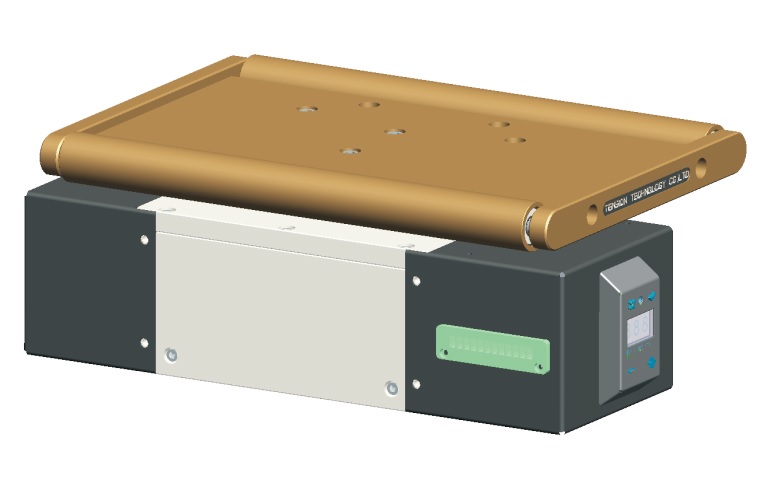
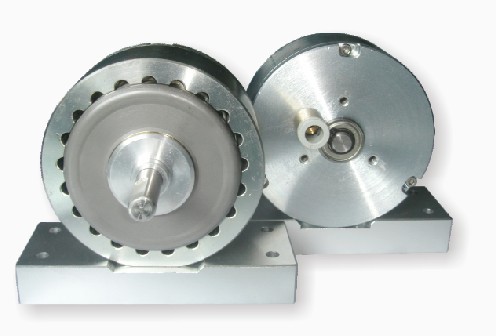
* **Auto Tier 1 Supplier:** Struggled with a 15% scrap rate on a complex transmission component using a mechanical press due to cracking. Switching to a servo press and optimizing the stroke profile (slow forming, controlled release) reduced scrap to under 2% and increased tool life by 40%. hysteresis brakes : Less than 2 years.
* **Electronics Enclosure Manufacturer:** Needed 3 separate presses (blank, form, pierce) for a specific part. A single servo press with multi-motion capability consolidated all operations into one hit. Reduced footprint, eliminated handling, and cut cycle time by 60%.
* **Medical Implant Producer:** Required absolute consistency in pressing porous coatings onto titanium joints. Servo press force profiling and real-time SPC monitoring ensured every part met stringent specifications, eliminating costly batch failures and recalls.
Choosing Your Servo Partner: Beyond the Brochure 🤝
Not all servo presses are created equal. Key considerations go beyond the basic specification sheet:
* **Drive System Architecture:** Direct-drive (motor directly on ram) offers supreme responsiveness and accuracy but can have size limitations. Belt/gear driven systems scale to higher tonnages. Understand the trade-offs.
* **Control System Intelligence:** The brain matters. Is the CNC sophisticated enough to handle complex motion profiles and force monitoring intuitively? Look for user-friendly interfaces with powerful offline programming capabilities.
* **Frame Rigidity \u0026 Construction:** Precise motion control demands an incredibly rigid frame to avoid deflection under load. Look for robust designs with high rigidity ratings.
* **Force Capacity \u0026 Tonnage Monitoring:** Ensure the press has ample overhead capacity for your applications and features high-resolution, reliable tonnage monitoring integrated into the control.
* **Service \u0026 Support Ecosystem:** This is advanced technology. Partner with a manufacturer or integrator known for exceptional technical support, readily available spare parts, and deep application expertise. Training is crucial.
* **True Total Cost of Ownership (TCO):** Look beyond the initial purchase price. Factor in the massive savings from reduced scrap, lower energy consumption, extended tool life, faster changeovers, and reduced downtime. The ROI often makes servo presses the *more economical* choice over time.
The Future Beckons: Servo 4.0 🌐
The servo press is the natural cornerstone of Industry 4.0. Its digital, programmable nature integrates seamlessly with the smart factory:
* **Predictive Maintenance:** Continuous monitoring of motor performance, vibration, force profiles, and energy consumption allows AI algorithms to predict component wear before failure, minimizing unplanned downtime.
* **Seamless Data Integration:** Production data (cycle counts, tonnage graphs, error logs) flows effortlessly into MES (Manufacturing Execution Systems) and ERP platforms, providing real-time production insights and traceability.
* **Remote Monitoring \u0026 Support:** Experts can diagnose issues or optimize programs remotely, reducing on-site service calls and accelerating problem resolution.
* **Adaptive Control:** Future systems may use in-process sensor data (e.g., material thickness variations detected via force) to dynamically adjust the stroke profile within the same cycle for ultimate quality assurance.
Embracing the Silent Revolution 🔇➡️🚀
The hum of the servo press is the sound of manufacturing evolving. It’s the sound of waste being eliminated, quality soaring, and possibilities expanding. It’s the sound of competitive advantage being forged.
Moving from a mechanical press to a servo system isn't just swapping machines; it's embracing a fundamentally different manufacturing philosophy centered on precision, intelligence, and adaptability. It requires investment, yes. But more importantly, it demands vision – the vision to see beyond the familiar thud and recognize the immense potential humming quietly on the horizon.
For companies serious about thriving in an era demanding higher quality, greater efficiency, sustainable practices, and relentless innovation, the question is no longer *if* to adopt servo press technology, but *how quickly* and *how strategically* to integrate this transformative power into their production core.
The future of metal forming isn't loud. It's precise. It's efficient. It's intelligent. It's servo. Is your factory ready to listen?